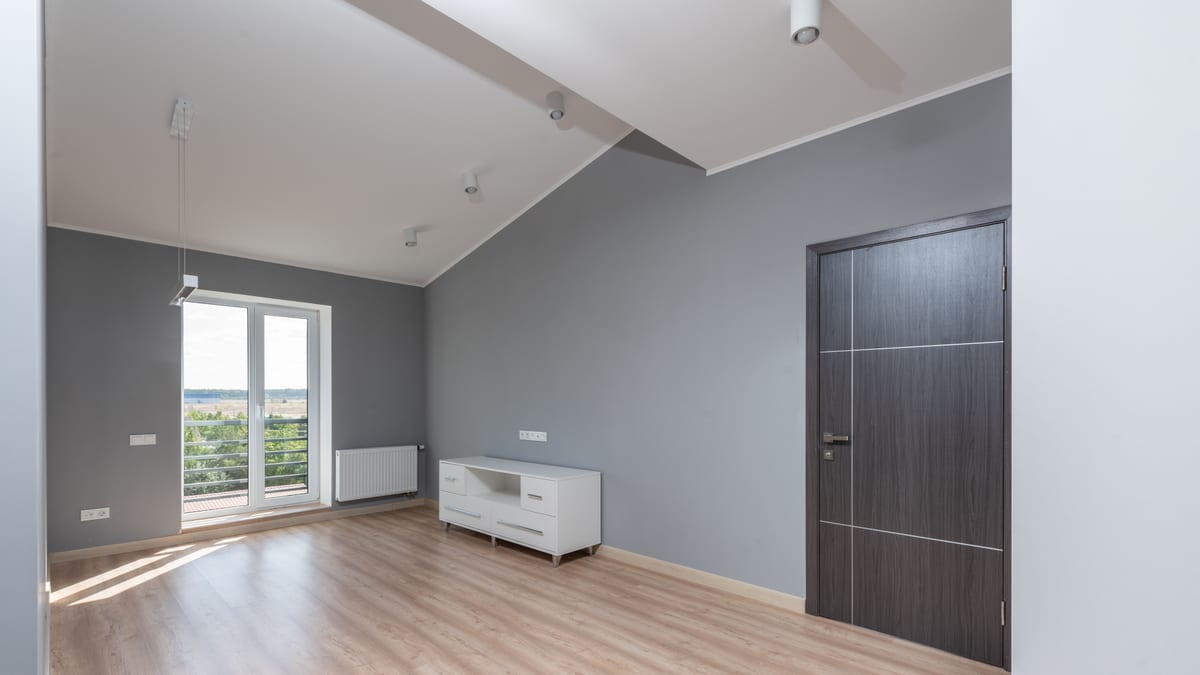
A flat bought as an investment often already has a tenant at the time of purchase, and the seller offers this as an advantage: rent flows in from the first day. For the buyer, however, it is also a commitment. What is taken over is not merely the flat but also an agreement concluded with the tenant by someone else, with its level of rent, its duration, the agreed security deposit and everything the parties have ever said to one another. If you do not verify this before signing the sale agreement, you will learn of it from the tenant.
A purchase does not end the tenancy
If ownership of the leased item changes, the acquirer enters into the legal position of the landlord, and the tenant is entitled to be released from their obligations towards the former owner as soon as the change has been notified to them or evidenced by the acquirer.
— Section 680(2) of the Civil Code (unofficial English translation)
From the day of registration in the Land Register you therefore become the landlord on the same terms as those that bound the seller. In the case of real property, only the tenant may terminate the tenancy on account of the change of owner itself, and may do so even where the tenancy is for a fixed term (Section 680(3)). The purchase in itself is therefore not a ground for you to give the tenant notice. You may give notice only on the grounds which the law allows for the type of tenancy concerned.
Which tenancy you are buying
What matters is the legislation under which the tenancy was concluded. An ordinary tenancy of a flat under the Civil Code is protected; failing agreement, it may be terminated only on the grounds laid down by law (Section 685(1)). A short-term tenancy under Act No. 98/2014 Coll. lasts, including extensions, no more than six years (Section 2), and the landlord may terminate it on the grounds set out in Section 7(1), including grounds agreed in the tenancy agreement. We explain the difference between the two regimes in the question what a short-term tenancy of a flat is.
In the case of a short-term tenancy, check also whether the seller complied with the landlord’s registration duty. If they did not, then once the time limit has expired in vain certain protective provisions of the Civil Code on notice also apply to the tenancy, and the landlord’s options for bringing it to an end narrow (Section 3(5) of Act No. 98/2014 Coll.). An agreement that presents itself as a short-term tenancy may therefore not give the buyer the advantages they counted on.
What to request before signing
- the tenancy agreement with all amendments, and the handover record from when the flat was given to the tenant,
- proof of the landlord’s registration, in the case of a short-term tenancy,
- an overview of rent and service payments and information on any arrears of the tenant,
- the amount of the security deposit paid and information on where it is held,
- consents to subletting, if the seller has granted any, and information on disputes with the tenant,
- the building manager’s confirmation of the seller’s arrears towards the building, which is a mandatory annex to an agreement on the transfer of a flat (Section 5(2) of Act No. 182/1993 Coll.); if the manager refuses to issue it, see the question the building manager’s confirmation on the sale of a flat.
The security deposit and the rent in the sale agreement
The security deposit serves to cover the landlord’s claims against the tenant, and on the termination of a short-term tenancy the landlord is obliged to return the unused part of it to the tenant (Section 5(1) and (3) of Act No. 98/2014 Coll.). Since you will be the landlord, the tenant may turn to you for the return of the deposit even though it was paid to the seller. The sale agreement should therefore provide that the seller hands the deposit over to the buyer, or that it is set off against the purchase price. In an ordinary tenancy under the Civil Code, the deposit is governed above all by what the parties agreed in the tenancy agreement, so read it from that angle too. The rules on the amount and return of the deposit in a short-term tenancy are described in the question the deposit in a tenancy of a flat.
As regards the rent, the decisive date is the date of transfer. The commentaries on Section 680 proceed on the basis that rent already due and other monetary claims for the period before the change of owner do not pass to the acquirer. The agreement should therefore apportion the rent and the service advances as at the date of registration, determine who is to settle the services for the current year, and oblige the seller to notify the tenant, together with the buyer, of the change of owner and of the new account for payments. Until that notification arrives, the tenant may pay the former owner.
If you want the flat vacant
If you are buying the flat for yourself, the tenancy must be brought to an end by the seller before the transfer, by agreement with the tenant or by notice for which there are grounds. In the sale agreement, make payment of the purchase price, or at least part of it, conditional on the handover of a vacated flat, and agree a penalty for delay. A promise that the tenant “will move out within a month” will not protect you without such a provision.
The opposite risk for an investor is that the tenant may terminate the tenancy precisely because of the change of owner, and may do so even where the tenancy is for a fixed term; notice must be given in the next notice period, if one is laid down by law or by agreement (Section 680(3) of the Civil Code). The rental income you counted on when buying is therefore not certain, and it is worth allowing for that when negotiating the price.
We will check the tenancy agreement before the reservation stage and prepare a sale agreement for a flat that deals with the deposit, the rent and the notification to the tenant. If you want a lawyer on your side throughout the purchase, see our legal assistance with buying property.
How this will work under the new Civil Code
On 1 October 2026, the National Council of the Slovak Republic approved the new Slovak Civil Code, which will take effect on 1 July 2027. The principle that a sale does not break a tenancy remains. Until someone notifies the tenant of the change of owner, the tenant discharges their obligations to the seller. For tenancies concluded from 1 July 2027, however, the buyer will feel the following changes:
- The seller and the buyer will be jointly and severally liable for obligations towards the tenant that arose for the seller up to the change of ownership.
- The seller will have to hand over the monetary security deposit to the buyer without undue delay. For a flat, it may not exceed three times the monthly rent and payments for services.
- The tenant will be able to give notice on account of the change of owner only within three months of the day on which the tenant learned or must have learned of it.
- If you need the flat for yourself or for a close person, notice will not entail replacement housing, as the new Act does not provide for it. A tenancy for an indefinite term will be terminable by notice even without a reason, with a six-month notice period.
The Act on short-term tenancy of flats is being repealed. Under the transitional provisions, a tenancy concluded by 30 June 2027 would, even after a later sale, be governed by the existing rules, including the grounds for notice and replacement housing. Details are given in the question contracts concluded before the new code takes effect.
The change also concerns debts owed to the building. The seller’s arrears connected with building management will pass with the flat to the buyer, and the seller will be liable for them as guarantor. How this will be reconciled with Act No. 182/1993 Coll., which is not being repealed, is not yet certain. When buying from 1 July 2027, therefore, request a confirmation from the building manager of debts that is no more than one month old and, where debts towards the building or the tenant are found, agree a specific sum to be held in escrow, the conditions for its use and a final deadline for settling accounts.
Status as of 22 October 2026: the act has been approved and was signed by the President on 20 October 2026, but has not yet been promulgated in the Collection of Laws. Until 30 June 2027, the rules described above in this article apply.
This article provides general legal information as at 22 October 2026. It does not constitute legal services or advice on your specific matter. Laws change and the details of your situation may differ. Check the appropriate course of action or contact us before making a decision.