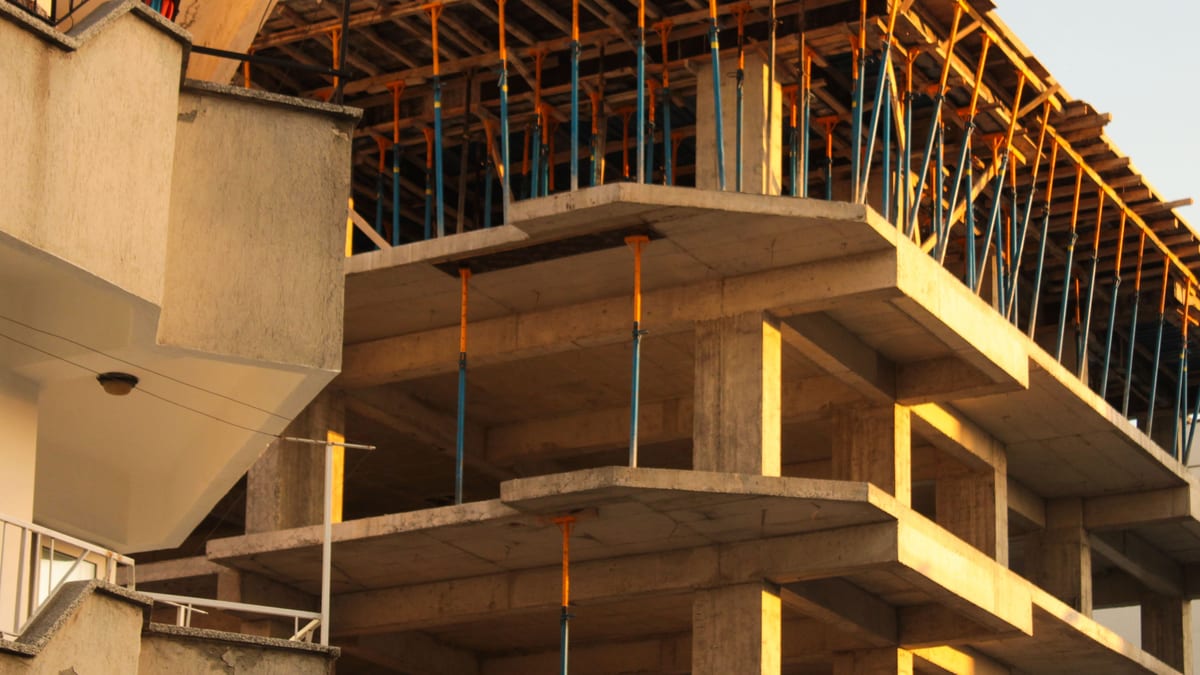



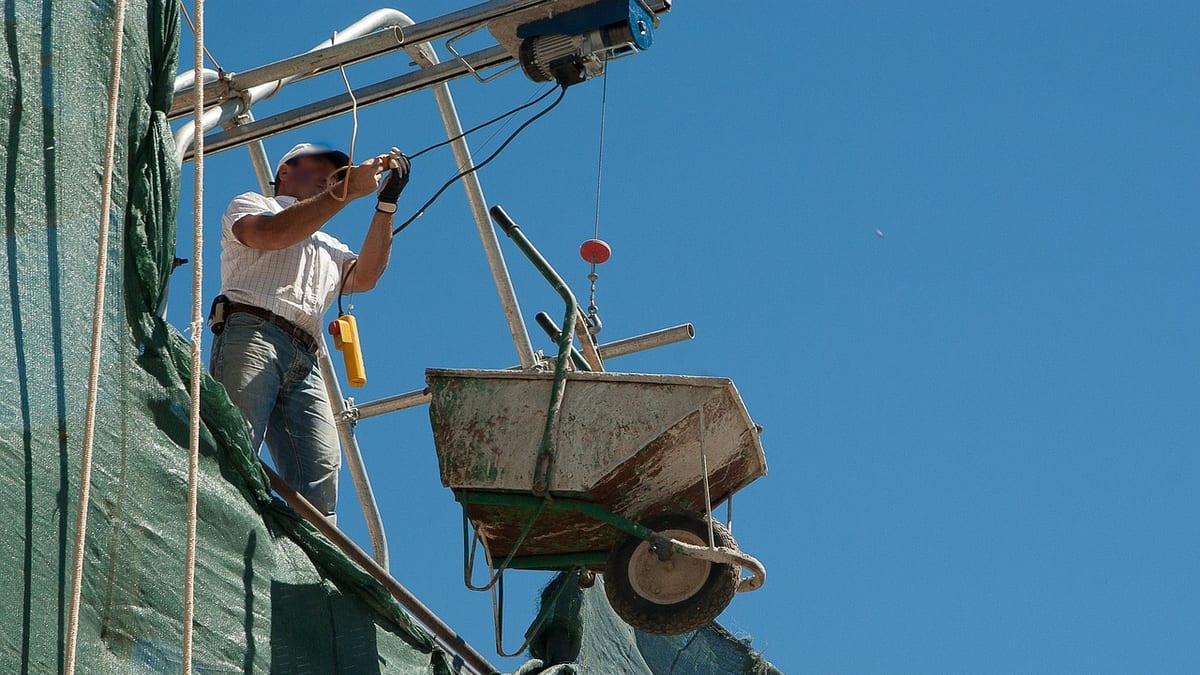
For decades, a construction company could register the unregulated trade of “carrying out construction and alterations” and build practically anything. The new construction legislation ended that approach on 1 April 2025: the trade was removed from the Trade Licensing Act, new registrations are no longer possible, and construction became a trade requiring professional qualifications. For new companies, this is an entry requirement; for holders of the old authorisation, a deadline is approaching.
Four new trades requiring professional qualifications
Annex 2 to Act No. 455/1991 Coll. now contains four entries covering the former unregulated trade. Entry 13 concerns managing notified minor construction, alterations and building maintenance; entry 13a covers construction supervision of notified works, minor structures and alterations. Both require education in construction, mechanical engineering or electrical engineering, supplemented by experience for secondary-school graduates. The core changes are entries 13b, “construction of buildings”, and 13c, “construction of civil engineering works”: alongside university or complete vocational secondary education and construction experience, they require a certificate of passing a professional competence examination or obtaining special professional competence.
The Slovak Chamber of Civil Engineers conducts examinations for site managers and construction supervisors under section 31(2)(k) and (l) of Act No. 138/1992 Coll. The bottleneck is therefore examination scheduling and preparation, rather than paperwork at the trade licensing office. Allow for this when planning a company launch or expansion.
Which activities remain unregulated
Preparatory construction work and finishing work on building exteriors and interiors remain unregulated trades. Companies performing only these partial activities need not address the change. The reverse also applies: holding only these authorisations does not authorise a company to construct a building as a whole. The authority assesses the distinction between finishing work and construction by the actual activity, rather than the invoice description.
A legal entity needs a responsible representative
A limited liability company has no education or experience of its own. It may carry on a trade requiring professional qualifications only through a responsible representative (section 11(6) of the Trade Licensing Act). The representative must be employed by the business while the trade is carried on; exceptions include a member of the legal entity (section 11(1)). A qualified company member is therefore the simplest solution. An external expert who merely “lends” their qualifications is a common source of problems, and the role may not be performed at multiple establishments.
The transition period to 31 March 2029—and who cannot use it
Authorisations obtained before 1 April 2025 benefit from a transitional provision:
Unofficial English translation: Trade authorisations for an activity whose substance corresponds to carrying out construction within the scope of an unregulated trade, obtained before this Act takes effect, remain valid until 31 March 2029 within the scope of the authorisation obtained before its effective date. — Section 80as(3) of Act No. 455/1991 Coll.
Professional competence must be demonstrated to the trade licensing office within the same period; otherwise the authorisation expires at the deadline (section 80as(4)). The transition attaches to the old authorisation, not the business owner. A company established after 1 April 2025 cannot obtain it simply by registering a trade and must demonstrate competence immediately. “We have until 2029” is therefore true for only part of the market and does not apply to a new project company within a developer’s group. Our advice on trade authorisation and registration in the Commercial Register explains when a legal entity’s authorisation arises.
What happens if a company builds without authorisation
Carrying on a trade requiring professional qualifications without authorisation can result in a fine of up to €3,319 under section 64 of the Trade Licensing Act; the ceiling for an unregulated trade is €1,659 under section 63. A company that fails to appoint a mandatory responsible representative also risks a fine of up to €1,659 under section 65a(1). Commercial consequences can be more significant: missing authorisation weakens the company’s position in building authority inspections, construction disputes and tenders requiring proof of authorisation.
What to do now
Companies with the old unregulated trade need to arrange their representative’s examination or recruit a qualified company member. New companies must resolve professional competence at launch. When incorporating a Slovak s.r.o., we align registered business activities with the actual work. Our legal support for construction companies includes reviewing existing authorisations and transitional deadlines. For individual projects, we prepare the construction contract, including rules for minor structures. Our advice on a returned minor construction notification explains what to do if the authority returns a notification.
This article provides general legal information as at 5 September 2026. It does not constitute legal services or advice on your specific matter. Laws change and the details of your situation may differ. Check the appropriate course of action or contact us before making a decision.