



Contracts and commercial relationships · Czechia and Slovakia
Bespoke commercial agreement
We tailor your commercial agreement to how you actually do business, rather than a universal template. We write clearly so you can understand it without a lawyer and use Slovak or Czech law according to which better serves your position. You also receive a plain-language summary of key points.
- Lawyer registered with both the Czech and Slovak Bar Associations
- Slovak or Czech law according to your transaction
- Fees agreed in advance
What we'll do for you
We match scope to the transaction; a simple supply does not need forty pages. We confirm exactly what the fee includes alongside the final amount in advance.
Select an item to see the details.
-
Initial consultation
We discuss what you trade and with whom, where agreements have caused problems before and what you need to protect.
-
Transaction risk analysis
We identify where the transaction could run into difficulties — payment terms, liability, penalties and termination — and propose safeguards.
-
Choice of governing law
We recommend Slovak or Czech law according to which better serves your position and explain why in clear language.
-
Bespoke draft agreement
An agreement written clearly and to the point, without clauses included merely because they have always been there.
-
Bilingual version on request
We can prepare every agreement bilingually (SK·EN or CZ·EN) in two columns. Both versions are drafted simultaneously, with a clear rule on which prevails.
-
Clear summary
You receive a brief plain-language summary of key points with the agreement. You know exactly what you are signing.
-
Incorporating comments
We assess the other party's comments and explain which are harmless and which weaken your position. We agree the number and scope of review rounds in advance.
Deliverablean agreement ready for signature + a brief plain-language summary of key points
How it works
Does this process fit your matter? Describe it to the attorney →
- Consultationday 0
We speak by telephone or meet. You only need to know what business you want to do; we provide the legal form.
- Draft agreementby the confirmed deadline
We prepare the first draft with a summary of key points and review it with you until you fully understand it.
- Other party's comments
If the other party comments on the draft, we assess the changes and explain their implications for your position.
- Signing
We prepare the final version for signature, in paper and electronic form as needed.
Five areas where contract disputes are lost
Disputes rarely arise from what an agreement contains. They arise from omissions or wording that can be read in two ways. These are the five areas we spend most time on when drafting.
Payment terms and security. Due dates, default interest, retention and security for receivables. These determine whether you wait weeks or years for your money.
Scope and limits of liability. What attracts liability, up to what amount and what is excluded from compensation. Unlimited liability appears in the other party’s drafts more often than clients expect.
Ending cooperation. Termination on notice, withdrawal, grounds and deadlines. With the wrong partner, an agreement you cannot leave is worse than none.
Governing law and dispute resolution. Which law applies and where a dispute is heard. Choice of law has limits and does not apply without exception to some relationships. We explain precisely where the boundary lies for your transaction at the initial consultation.
Clarity as prevention. A clear agreement is negotiated faster and less often results in an interpretation dispute. Legal precision does not suffer; it remains our responsibility.
No-obligation enquiry
Ready to start?
Send us an enquiry. We reply within 24 hours with a price confirmation and next steps. The first 30-minute consultation is free and commits you to nothing.
- 1Send your enquiry via this form
- 2Within 24 h you get a price confirmation and plan
- 3We start work only after your approval

Not keen on calls or email? Message us on WhatsApp →
Prefer to book a time right away? Book a consultation →
Or email us about this matter.

What clients ask
Didn’t find your question? Ask us directly →
Why is an internet template insufficient?
A template does not know your transaction. It does not address your payment terms, liability or partners. It often comes from another legal system or a period when different rules applied. The gaps left by a template are often where later disputes are lost.
Will Slovak or Czech law govern the agreement?
For transactions between Slovakia and Czechia, you can generally choose. We recommend the law that better serves your position, considering where a dispute would actually be litigated and enforced. Choice of law has limits and does not apply without exception to some relationships. We explain the limits for your transaction in advance. Because we practise in both countries, we do not have to steer you towards the law we know: we know both.
Will the other party understand the agreement too?
Yes, deliberately so. A clear agreement is negotiated faster and less often results in an interpretation dispute. Legal precision does not suffer; it remains our responsibility.
The other party has already sent its draft. What happens to it?
We need not start again. We assess the draft, mark risks and prepare comments. We explain what is standard, what is disadvantageous and what is a red line.
Do I need an agreement in English or for an overseas partner?
We prepare a bilingual SK·EN or CZ·EN version in two columns, including a rule on which version prevails. Bilingual preparation is part of drafting the agreement, rather than a separate service.
What if the transaction terms change over time?
We structure the agreement for easy amendment through an addendum rather than rewriting the entire document. We handle changes for existing clients on an ongoing basis, with the fee confirmed in advance.
Legal Q&A
Common questions on this topic
-
Must an agreement be in writing to be valid?
Most agreements are valid orally: Slovak law generally allows freedom of form. However, writing may be required by law, for example for property transfers, or by the parties themselves. If the prescribed written form is missing, the agreement is invalid. Amendments require a distinction between civil and commercial law: in a commercial relationship, merely signing the agreement in writing does not mean that every amendment must also be in writing. In practice, writing is recommended even where the law does not require it, for evidence and certainty.
Read the answer -
How does a contractual penalty work, and is it enforceable?
A contractual penalty is a monetary sanction for breach of a contractual obligation. It is valid only if agreed in writing with a specified amount or at least a calculation method. The creditor is entitled to it even without loss, but generally cannot claim damages alongside it unless otherwise agreed. A court may reduce an excessively high penalty on application.
Read the answer -
How can I validly withdraw from an agreement?
You may withdraw only if the law or the agreement permits it, rather than simply because you wish to. Under civil law, the agreement is generally cancelled from the outset; under commercial law, it terminates when the withdrawal notice is delivered, with the effects prescribed by Section 351 of the Commercial Code. In commercial relationships, the right depends on whether the breach is material, allowing immediate withdrawal, or non-material, requiring an additional period for performance to expire unused. Withdrawal must be notified without undue delay.
Read the answer
Further reading
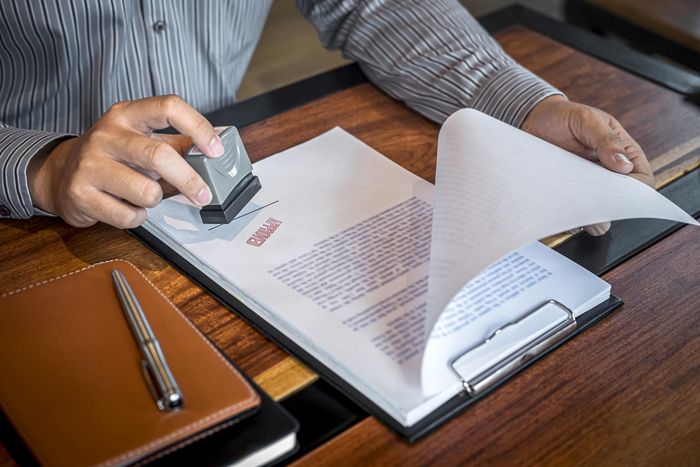
Non-compete clauses: different rules in Slovakia and Czechia
The governing law and type of contract are decisive for a non-compete clause. Slovak § 672a regulates commercial agency and imposes a two-year ceiling; in other commercial relationships, the proportionality of the restriction must be assessed separately. Czech § 2975 has a general five-year ceiling and does not require compensation, although commercial agency is subject to special rules in Czechia too.
Read more →
The end of two codes: obligations under a single code
The same contract is currently governed by different rules depending on whether it falls under the Civil or Commercial Code. The new Civil Code is intended to end this dual system by bringing commercial obligations into a single code.
Read more →
Contract invalidity under the new rules: introducing avoidance
The new Civil Code changes the concept of contractual invalidity. Only what is currently absolutely invalid should remain invalid; relative invalidity will be replaced by avoidance subject to a shorter deadline. Greater transactional certainty, but less time to act.
Read more →