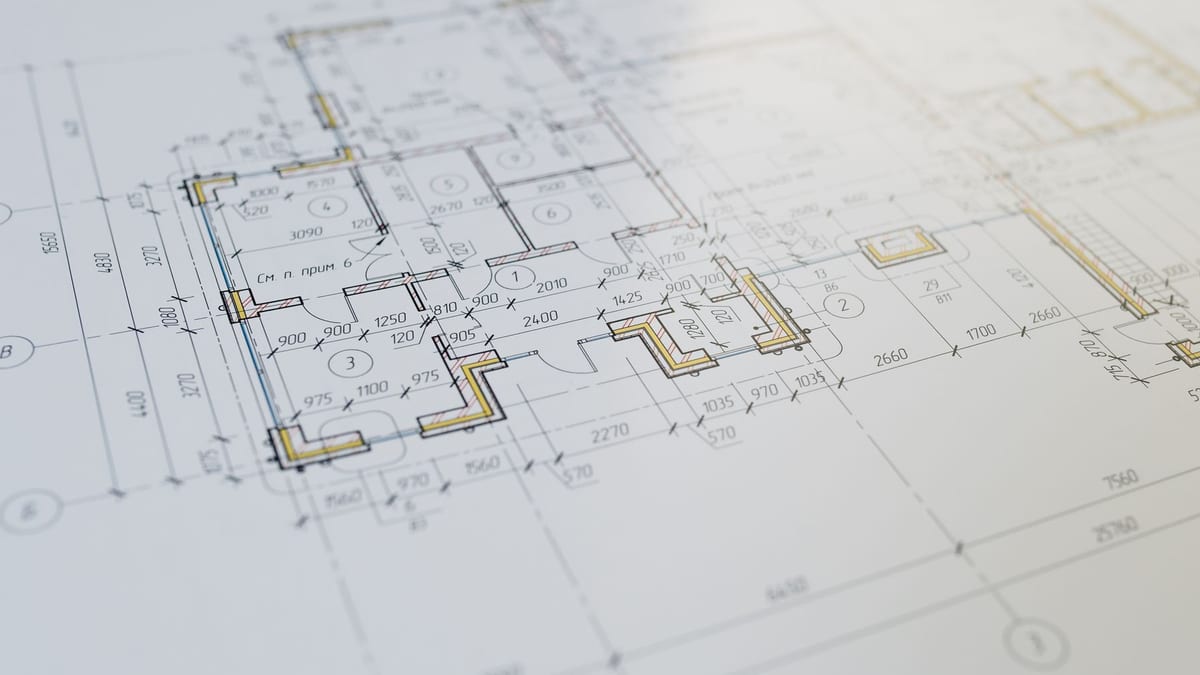
A developer holds the land, a decision on the building intent and a partly completed building design, and decides to sell the project to another investor or to bring in a partner. On due diligence, the buyer finds that although it can be given the documentation, it is unclear whether it may use it for permitting, completion and construction. The reason is that the study and the design documentation are as a rule copyright works, and the investor does not hold the economic rights in them, only a licence. That licence is governed by the Copyright Act (Act No. 185/2015 Coll.), not by the rules on the sale of things.
What the developer actually holds
If the contract with the architect or the designer does not expressly regulate the licence, then for a commissioned work the author is deemed to have granted consent to use it for the purpose arising from the contract; any other purpose requires its further consent (Section 91(1)). If the licensing arrangement does not specify the manner of use, the licence extends only to the manner necessary to achieve the purpose of the contract (Section 66(1)). Absent an agreement on exclusivity, the licence is non-exclusive (Section 70(1)) and the author may itself use the commissioned work or grant it to another, provided this does not conflict with the legitimate interests of the commissioning party (Section 91(2)), which gives the buyer of the project no certainty that it will be able to use the documentation for its own purposes.
Assigning the licence requires the author’s consent
The key rule for the sale of a project reads:
The licensee may assign the licence by contract only with the author’s prior consent. The licensee must inform the author of the assignment of the licence and of the identity of the assignee without undue delay. Unless otherwise agreed, the author’s consent is not required on a sale of an enterprise or part of an enterprise of which the licence forms part.
— Section 72(2) of Act No. 185/2015 Coll. (unofficial English translation)
Likewise, the grant of a sub-licence, that is, consent for a third party to use the work within the scope of the licence, requires the author’s prior consent (Section 72(1)). If the licence agreement is in writing, the assignment and the sub-licence must also be in writing unless the agreement provides otherwise (Section 72(3)). The commentary on the Copyright Act reads prior consent as consent the author may give as early as in the licence agreement; what matters is that it exists before the assignment.
Three ways of selling and their consequences
Sale of the land with the documentation. The buyer acquires the land, but the licence remains with the developer until it is assigned with the author’s consent. Under the Act, a decision on the building intent is binding on the builder’s legal successors as well (Section 18(2) of Act No. 25/2025 Coll.), but it does not of itself transfer the licence to the documentation. If the architect or the designer has not given consent in advance, it becomes a party on the sale without which the buyer will not obtain the licence, and it may make its consent conditional on further remuneration.
Sale of the project company. If the licensee is a project company and the buyer acquires its ownership interest from the developer, the licence is not transferred, because its holder remains the same. From a licensing perspective this is the simplest route, but it assumes that the contracts with the architect and the designer were concluded by the project company itself, not by the parent company or the managing director personally. Due diligence should also verify whether the licensing arrangement contains a restriction on a change of shareholder. Where a legal person is dissolved, for example on a merger, the rights under the licence agreement pass to the legal successor unless the agreement has excluded this (Section 71(1)).
Sale of an enterprise or part of one. On such a sale the author’s consent to assignment of the licence is not required unless otherwise agreed (Section 72(2)). That, however, is a separate contract type with its own requirements, and on a sale of a single project it must be assessed separately whether it constitutes a part of an enterprise at all.
What to have in the contracts from the outset
If the developer reckons with the possibility of selling the project, financing it with a partner or completing it with another designer, it should resolve this on signing the contract with the architect and the designer, when its bargaining position is strongest. We recommend agreeing:
- an express licence with the manners of use for permitting, elaboration, implementation, alterations and marketing of the project,
- exclusivity, which requires written form (Section 65(3)), and the duration of the licence,
- the author’s prior consent to assignment of the licence and to the grant of a sub-licence to the buyer of the project, the financing bank or a new designer, without any claim to further remuneration,
- that the remuneration for the licence is included in the price of the works, given that a licence agreement is to contain remuneration unless free provision has been agreed (Section 65(1)),
- delivery of the source files, not merely drawings in PDF format.
On due diligence of a project, all the works comprising it must be reviewed: the study, the stages of design documentation, any visualisations by other authors and the parts prepared by specialists. Each of them may have a different author and a different licence. How the contracts for the individual stages dovetail is explained in the article from an architectural study to the building design; the general rules are set out in the question copyright in design documentation.
We set up licensing arrangements through the services design documentation agreement and architectural study agreement. If you are selling or buying a project now, we will review the chain of licences and prepare the authors’ consents so that they do not hold up signing.
This article provides general legal information as at 12 September 2026. It does not constitute legal services or advice on your specific matter. Laws change and the details of your situation may differ. Check the appropriate course of action or contact us before making a decision.